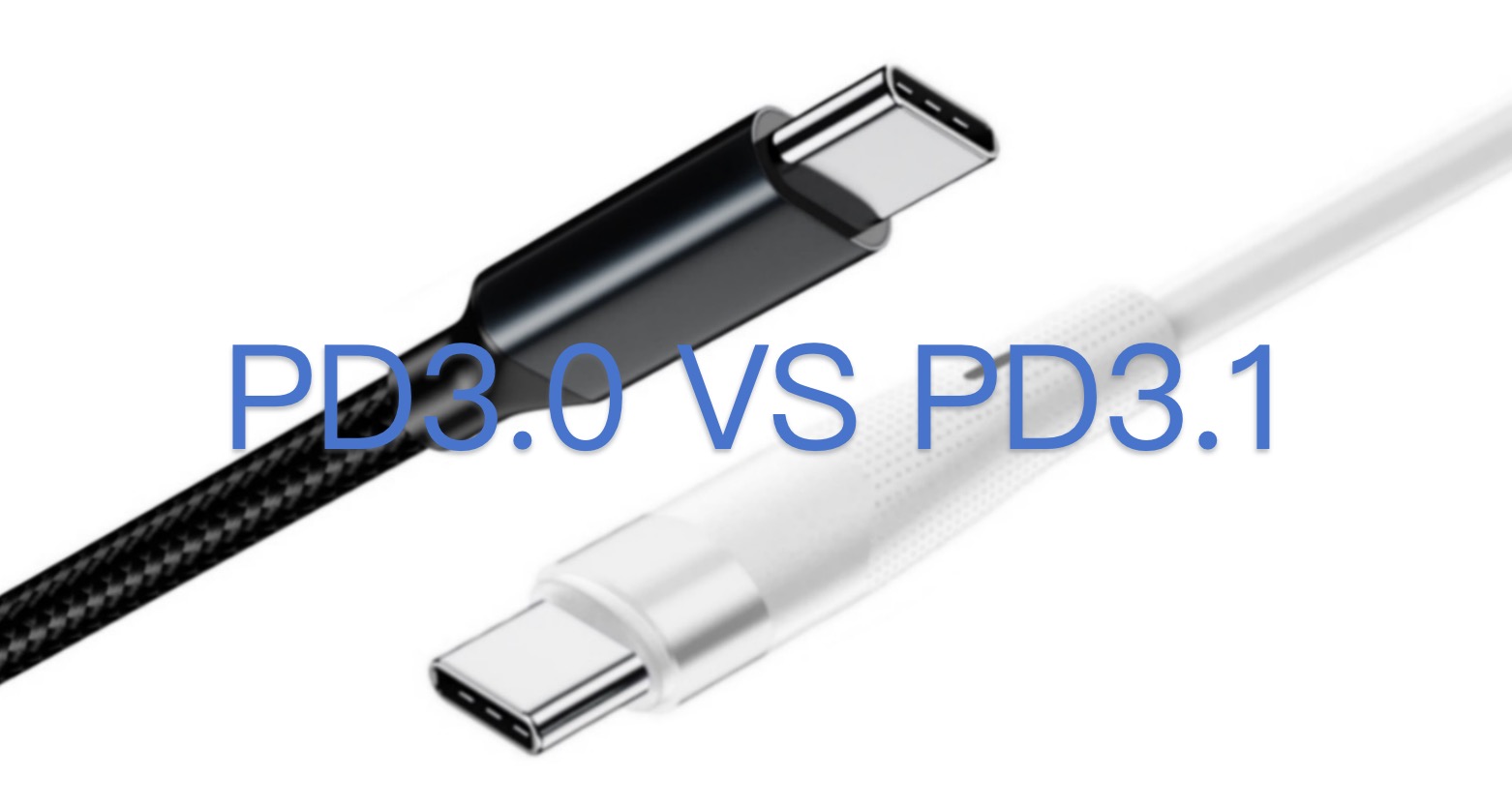
When USB-C power delivery keeps evolving, many OEM manufacturers face confusion about PD 3.0 and PD 3.1 differences.
PD 3.1 supports higher charging power up to 240W with new AVS and EPR protocols, while PD 3.0 is limited to 100W. The change affects chip selection, cable certification, and cost.
Many manufacturers assume upgrading from PD 3.0 to PD 3.1 is just a firmware change, but in fact, the difference lies deep in voltage tolerance, E-marker chips1, and safety standards2. Let’s break it down clearly.
Understanding E-Marker Chips: The Hidden Key to Safe Fast-Charging Cables?
When cables fail to handle high power, overheating or damage often points to the E-marker chip.
E-marker chips are mandatory for both PD 3.0 and PD 3.1 cables, but PD 3.1 requires chips rated for at least 50V to handle 48V/5A safely.
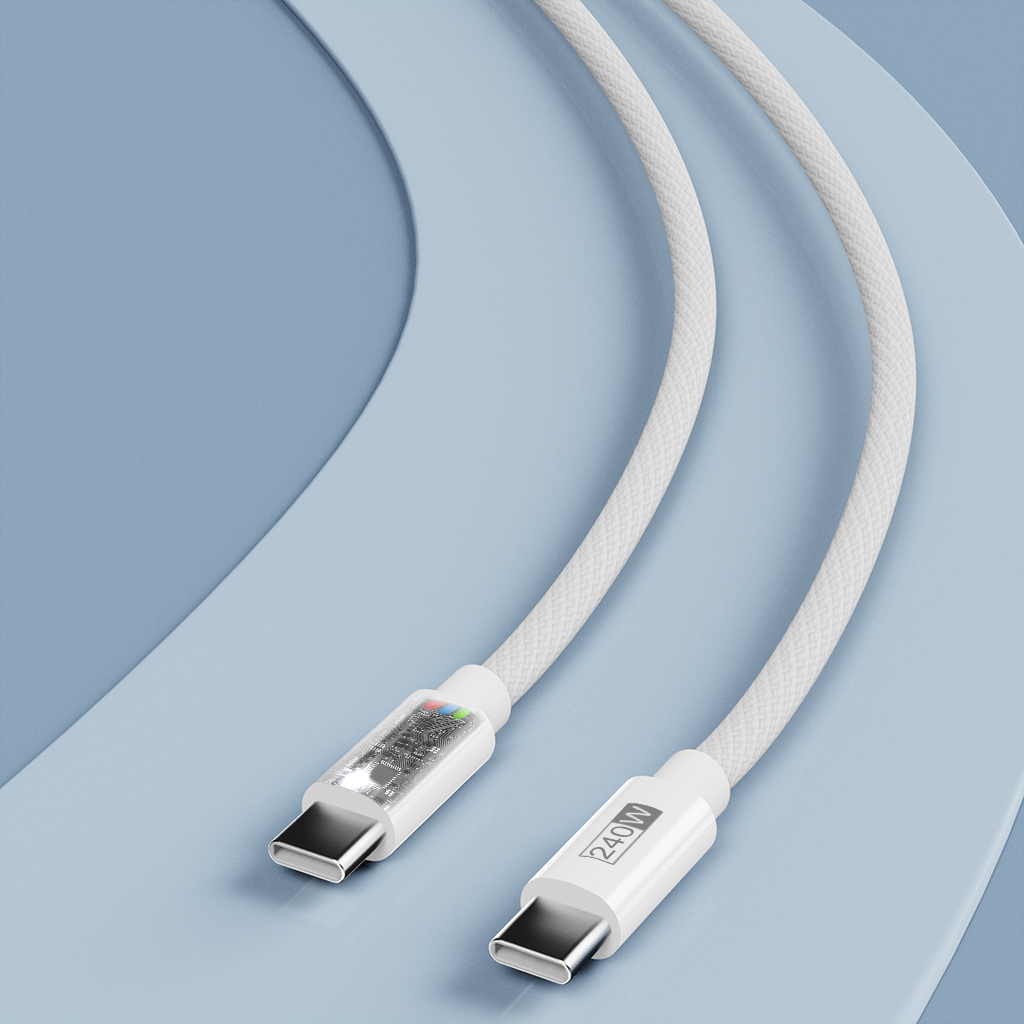
The E-marker chip acts as the cable’s “ID card.” It communicates voltage, current, and certification information between the charger and device. Under PD 3.0, a 100W (20V/5A) limit is standard. But PD 3.1 introduces the Extended Power Range (EPR)3 with 28V, 36V, and 48V levels—demanding chips that can manage up to 240W.
In OEM cable production, this directly increases material cost and requires strict voltage isolation design. A chip that fails at high voltage can cause severe safety hazards like short circuits or melting connectors.
Below is a simplified comparison:
| Protocol | Max Power | Voltage Range | Chip Requirement | Safety Level |
|---|---|---|---|---|
| PD 3.0 | 100W (20V/5A) | Fixed | 30V-rated | Standard |
| PD 3.1 | 240W (48V/5A) | Adjustable (AVS/EPR) | 50V-rated | High |
That’s why reliable OEMs invest in certified E-marker chips and real testing, instead of reprogramming old chips to fake PD 3.1 compatibility. Cutting corners at this level risks user safety and brand reputation.
The Rise of 240W USB-C Charging: What It Means for OEM Manufacturers?
The shift toward 240W charging isn’t just a technical update—it’s a signal of a new charging era.
PD 3.1 expands USB-C charging to 240W, powering even laptops and small appliances, forcing OEM cable makers to meet higher safety and certification demands.
240W USB-C charging laptop4 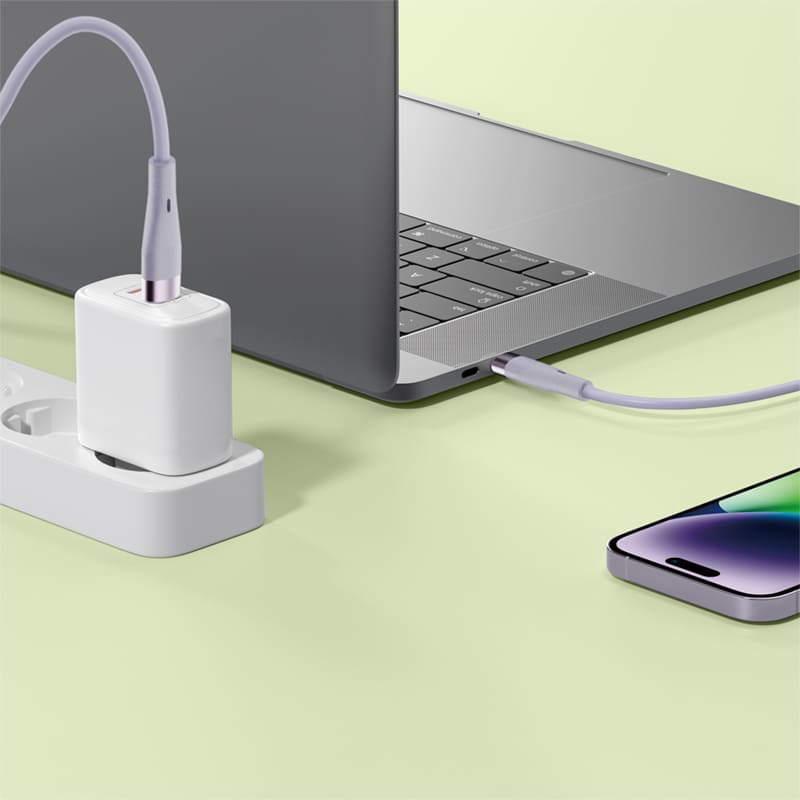
With more devices—from gaming laptops to monitors—adopting USB-C power input, 100W cables are no longer enough. The new 240W standard uses AVS (Adjustable Voltage Supply)5, which allows the charger to fine-tune voltage output for better efficiency and less heat.
A recent example is Apple’s iPhone 17, which supports AVS with its 40W charger. Although its total power draw is below PD 3.0’s 100W limit, the charging optimization comes from the charger-device handshake under AVS—not the cable. As long as the cable supports the rated current and voltage, PD 3.0 cables can still handle AVS-based charging.
However, for OEM manufacturers, preparing for PD 3.1 is a must. The demand for 240W cables is growing across laptops, power tools, and mini projectors. Production lines must upgrade E-marker programming, 50V insulation materials, and thermal stability testing.
| Feature | PD 3.0 | PD 3.1 |
|---|---|---|
| Max Voltage | 20V | 48V |
| Max Power | 100W | 240W |
| Protocols | SPR (Standard Power Range) | EPR (Extended Power Range), AVS |
| Cable Requirement | 30V tolerance | 50V tolerance |
| Target Devices | Phones, tablets | Laptops, appliances, power tools |
For OEM manufacturers, this transition also means a marketing opportunity. PD 3.1-certified cables can be sold as premium products with stronger safety assurance and longer durability—features that appeal to quality-conscious customers.
Conclusion
PD 3.1 isn’t just a spec upgrade. It redefines USB-C cable safety, power range, and market positioning. OEM manufacturers must invest in quality chips, testing, and certification to stay ahead.
Learn how E-marker chips ensure safe and efficient charging, crucial for high-power applications. ↩
Discover the safety standards that govern USB-C cables, ensuring user safety and device protection. ↩
Find out how EPR expands the capabilities of USB-C, allowing for higher power delivery. ↩
Discover the range of devices that benefit from 240W charging, highlighting the importance of this technology. ↩
Understand how AVS optimizes charging efficiency and reduces heat, enhancing device performance. ↩